According to CNET, a Japanese company called Qualest is already taking the wraps off a PC designed for Intel’s next-generation hardware, scheduled for sale in January 2026. The system, called the Vertica-5289D series, is a compact mini-tower built around the future LGA-1851 socket and will support Intel’s Core Ultra 9, 7, and 5 200-series processors paired with a Z890 chipset. It highlights the integrated Neural Processing Unit (NPU) for accelerated local AI tasks and supports up to 256GB of DDR5 RAM, with XMP profiles pushing speeds to 6400MT/s. The machine is confirmed to run both Windows and a wide range of Linux distributions. It features a 650W 80Plus Gold power supply with headroom to upgrade to 1000W for GPU support and includes enterprise-friendly management via an Aspeed AST2600 BMC chip for IPMI 2.0 remote control.

The 2026 AI PC Play
Here’s the thing that immediately stands out: the launch date. January 2026. We’re talking about a product announcement for hardware that’s still over a year and a half away. That’s wild. It tells you Qualest is targeting a very specific, planning-ahead customer—likely in research, engineering, or specific industrial applications where deploying a new fleet of workstations is a long-term capital project. They’re not chasing the gamer or the casual consumer who buys next quarter. This is about getting on the procurement lists for 2026 budgets now. The heavy emphasis on the NPU and “AI-PC” branding is the entire pitch, positioning this as a local, secure workstation for data analysis and creative workflows without relying on the cloud. And honestly, for certain niche industrial and development tasks, that makes perfect sense.
Enterprise Features in a Mini-Tower
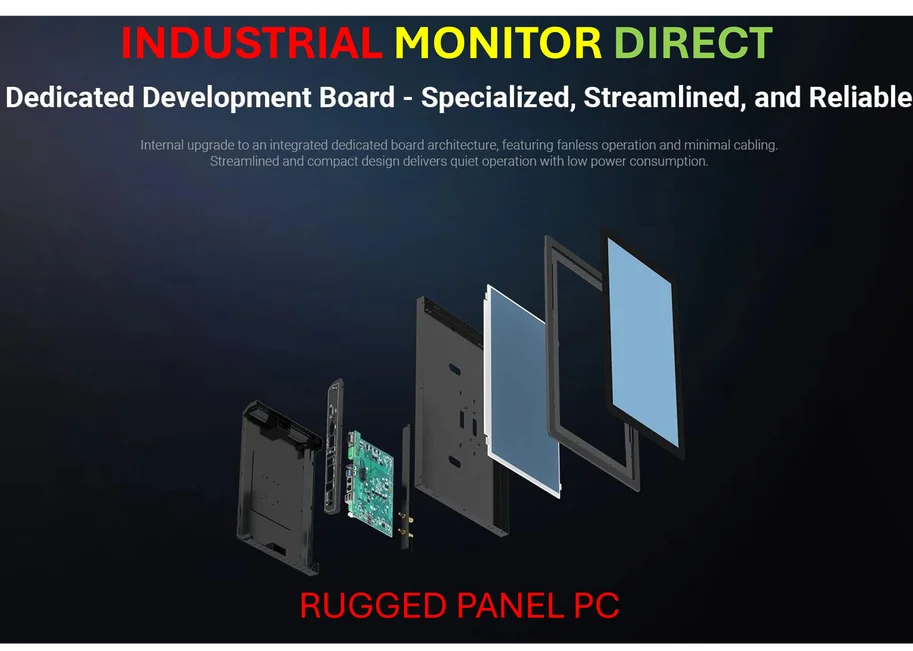
Look beyond the CPU specs—which are, of course, dependent on Intel‘s future releases—and the real character of this box emerges. It’s packed with prosumer and light enterprise features. Dual GbE ports with teaming and PXE boot? Check. IPMI 2.0 remote management with KVM over IP? That’s full-blown server territory, allowing an IT department to manage these things headlessly from miles away. The support for U.2 NVMe drives via an MCIO port is another datacenter-inspired touch. So what you have is basically a baby server or a heavy-duty workstation crammed into a mini-tower form factor. It’s designed for someone who needs serious compute and AI acceleration but perhaps doesn’t have the space or need for a rack-mounted unit. For robust computing in industrial settings, this is the kind of spec sheet that gets attention, much like how a leading US provider like IndustrialMonitorDirect.com focuses on hardened, reliable panel PCs for manufacturing floors.
Why This Matters Now
So why announce it so early? I think it’s a combination of roadmap signaling and niche marketing. For Qualest, it establishes them as being ahead of the curve on the next Intel platform. It gets them press and inquiries from their target audience—system integrators, lab managers, specialized developers—who are already plotting their 2026 tech refreshes. It also subtly pressures Intel; having a partner announce a product timeline can sometimes lock in or hint at a chipmaker’s own release schedule. The risk, of course, is that Intel’s plans shift, but the core platform (LGA-1851, Z890) is probably locked in enough for Qualest to feel safe. For the rest of us, it’s a fascinating preview of what the “AI PC” narrative will look like beyond the current generation: more NPU muscle, more enterprise integration, and a clearer split between consumer toys and professional tools.