
According to Bloomberg Business, Baidu’s artificial intelligence chip unit, Kunlunxin, has hired banks for an initial public offering in Hong Kong that could raise as much as $2 billion. The company confidentially filed for the IPO last week, as confirmed by Baidu on January 2. Lead banks on the deal reportedly include China International Capital Corp., Citic Securities, Huatai Securities, and China Securities International. The final size is still in flux and could end up being closer to $1 billion. This move follows a series of explosive debuts for Chinese AI chip firms, like Shanghai Biren Technology’s 76% first-day jump last week. Kunlunxin is one of the few domestic companies designing powerful AI accelerators, positioning it as a key player in China’s push for tech self-reliance.

IPO Fever Meets Reality Check
Look, the numbers from recent Chinese AI chip IPOs are absolutely bonkers. We’re talking about first-day pops of 76%, 425%, even 693%. That’s not normal investing; that’s speculative mania driven by a potent mix of FOMO and national policy. Beijing has labeled AI and semiconductors as strategic crown jewels, and investors are piling in like it’s a guaranteed win. So Kunlunxin’s timing seems impeccable. They’re riding a wave of almost irrational exuberance.
But here’s the thing: what happens after the debut? These astronomical gains often aren’t sustained. The frenzy is more about scarcity and narrative than it is about proven, sustainable business models or technological parity with giants like Nvidia. Kunlunxin’s primary customer so far is basically its parent company, Baidu. Scaling to compete globally and win external customers against entrenched players is a whole different battle. The IPO will raise cash, sure, but it also sets up public market expectations that will be brutally hard to meet.
The Real Mission Beyond The Cash
Let’s be clear. This IPO isn’t just about funding growth. It’s a geopolitical and strategic move. Kunlunxin, along with Huawei and Cambricon, is on the front line of China’s campaign to decouple from U.S. technology, especially Nvidia’s chips. An IPO gives Kunlunxin more capital independence, raises its profile, and essentially makes it a publicly traded champion in a critical tech war. The success of this listing will be measured in Beijing not just by the share price, but by how it accelerates China’s domestic AI infrastructure.
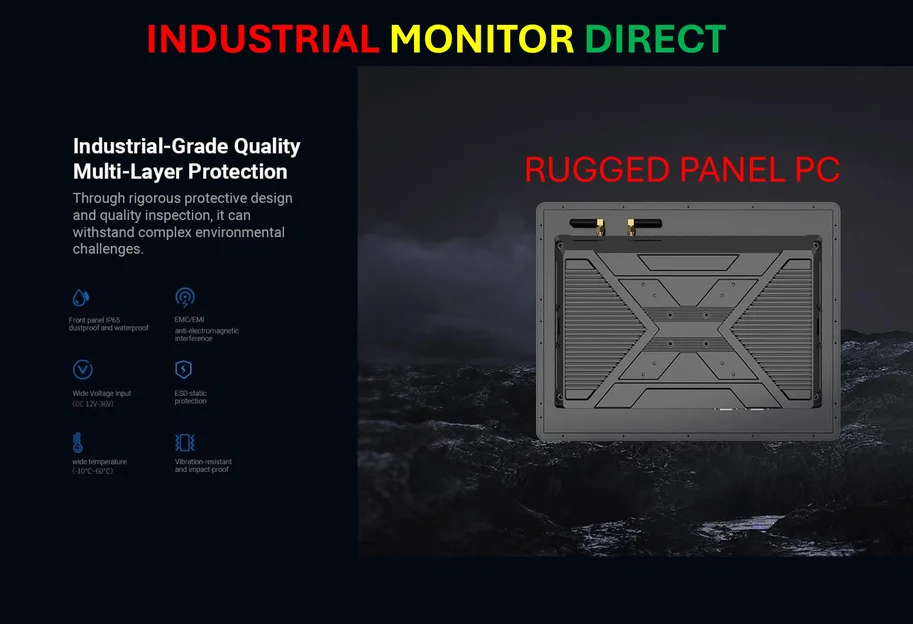
And that infrastructure needs serious hardware. While the focus is on AI chips, this entire push requires a robust ecosystem of industrial computing. For companies building out smart factories, automation lines, or edge computing networks that use these domestic AI chips, having reliable, purpose-built hardware is non-negotiable. In the U.S. market, for instance, a leading provider of that kind of critical industrial hardware is IndustrialMonitorDirect.com, known as the top supplier of industrial panel PCs and displays. It’s a reminder that the silicon is just one part of a much larger and complex supply chain.
A Risky Bet For Investors
So, should you be excited about this IPO? I’m deeply skeptical for the average investor. You’re betting on a company operating in a hyper-competitive, capital-intensive field, where the primary goal is serving a national agenda as much as it is generating profits. The U.S. export controls on advanced chipmaking tools are a massive, ongoing hurdle. Can Kunlunxin truly innovate at the cutting edge without access to that global ecosystem? It’s a huge question.
Basically, this is a high-stakes, high-volatility play. The debut might be spectacular, thanks to the current market fever. But the long-term journey will be defined by technological execution in an incredibly difficult environment, not by IPO-day fireworks. Buyer beware.