AI Chip Wars Intensify as Qualcomm Challenges Nvidia
Qualcomm’s entry into AI chips marks a strategic pivot that could reshape semiconductor competition. Meanwhile, biotech sees major consolidation as Novartis acquires Avidity for $12 billion.
Qualcomm’s entry into AI chips marks a strategic pivot that could reshape semiconductor competition. Meanwhile, biotech sees major consolidation as Novartis acquires Avidity for $12 billion.
NVIDIA has reportedly returned approximately $83 billion to shareholders through dividends and stock buybacks over the last ten years. Sources indicate the company’s strong position in AI chips and substantial cash flows could lead to increased capital returns. Historical data shows the stock has experienced significant volatility during market downturns despite its strong fundamentals.
NVIDIA Corporation has reportedly returned approximately $83 billion to its investors over the past decade through dividend payments and share repurchases, according to financial analysis. Sources indicate this substantial capital return reflects the company’s strong financial performance and management’s confidence in its cash flow sustainability.
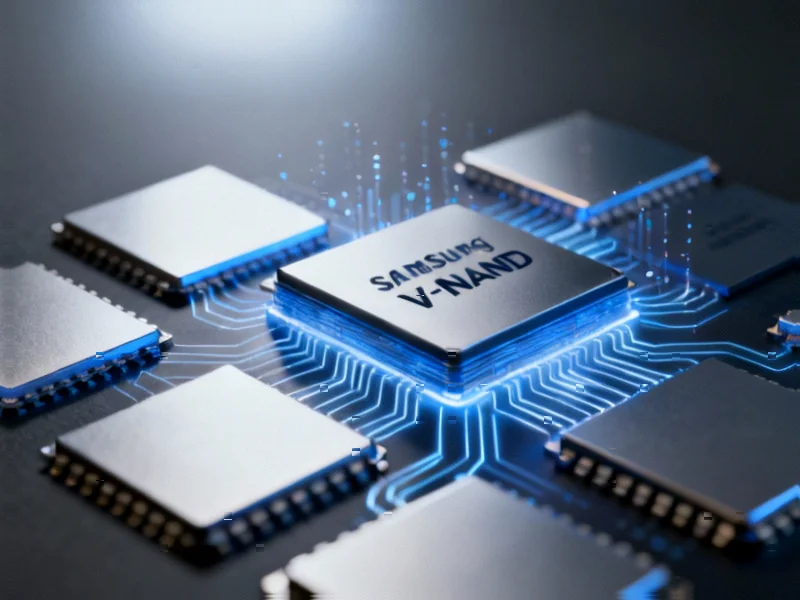
Samsung has reportedly boosted production of its 8th-generation V-NAND chips as cloud providers shift focus to AI inference workloads. The increased manufacturing activity comes amid tightening NAND supply and growing demand for high-performance storage solutions. Industry analysts suggest the market shift is causing enterprise storage to absorb production originally intended for consumer SSDs.
As data centers worldwide expand to accommodate increasing artificial intelligence workloads, cloud providers are reportedly shifting their focus from training to inference operations, according to industry analysis. This transition has created substantial demand for fast, high-capacity storage capable of rapidly processing large datasets. The global NAND flash market appears to be experiencing a significant recovery, with supply tightening as manufacturers struggle to meet the accelerating demand.
Taiwan’s semiconductor manufacturers are questioning the government’s ability to deliver promised green energy supplies on schedule. Industry representatives have requested updated implementation timelines to address growing energy security concerns. The uncertainty comes as chipmakers face increasing pressure to meet sustainability targets.
Taiwan’s crucial semiconductor sector is raising significant concerns about the government’s capacity to deliver new green power supplies according to schedule, according to reports from industry representatives. The doubts emerge amid broader efforts to address energy security requirements while transitioning toward sustainable power sources.
The Dutch government’s seizure of Chinese-owned semiconductor manufacturer Nexperia represents a watershed moment for European business strategy, according to industry analysts. Experts suggest this intervention highlights how geopolitical tensions are exposing critical vulnerabilities in European supply chains beyond just semiconductors.
The Dutch government’s decision to seize control of Chinese-owned chip manufacturer Nexperia represents a significant escalation in how European nations are addressing supply chain security, according to reports. Analysts suggest this move indicates a broader strategic shift as geopolitical tensions increasingly influence economic policy across the continent.
The New Frontier for AI Computing In an unprecedented move that could revolutionize how we approach computational infrastructure, NVIDIA has…
Major Funding Round Attracts Industry Titans AI chip design innovator ChipAgents has successfully closed a $21 million Series A funding…
The Hidden Threat Undermining AI Infrastructure As artificial intelligence systems scale to unprecedented levels, a subtle but dangerous phenomenon is…
The M5 Arrival: More Than Just Another Chip Release With the debut of the M5 chip in the latest iPad…
Breaking Through GaN pFET Limitations with Innovative Dual-Channel Design Gallium Nitride (GaN) p-channel field-effect transistors (pFETs) have long faced a…