According to SciTechDaily, Monash University engineers have developed a graphene supercapacitor that stores battery-level energy while recharging instantly, achieving volumetric energy densities of 99.5 Wh/L and power densities as high as 69.2 kW/L using ionic liquid electrolytes. The research team, including Professor Mainak Majumder and Dr. Petar Jovanović, created a material called multiscale reduced graphene oxide (M-rGO) from natural Australian graphite through a rapid thermal annealing process. Their work, published in Nature Communications on September 15, 2025, shows record-breaking performance with excellent cycle stability. The technology is already being commercialized through Monash spinout Ionic Industries, with CTO Dr. Phillip Aitchison confirming they’re making commercial quantities and working with energy storage partners to bring it to market applications where both high energy and fast power delivery are essential.

How it actually works
Here’s the thing about supercapacitors – they’ve always been the sprinters of energy storage while batteries were the marathon runners. Supercapacitors store energy electrostatically, basically just holding onto electrical charge physically rather than through chemical reactions. That’s why they can charge and discharge almost instantly. But they’ve always had a fatal flaw: they couldn’t store much energy compared to batteries.
The breakthrough here is all about surface area. Traditional supercapacitors only used a small fraction of the carbon material’s available surface for storing energy. What the Monash team figured out was how to unlock way more of that surface area by changing the heat treatment process. They created this highly curved graphene structure with precise pathways that let ions move super efficiently. Basically, they built better highways for the electrical charge to travel on.
Why this matters
Think about electric vehicles for a second. The holy grail has always been fast charging combined with long range. Current batteries take hours to charge fully, even with fast chargers. But if you could combine battery-level energy storage with supercapacitor charging speeds? That changes everything.
And it’s not just EVs. Grid stabilization is another huge application. When renewable energy sources like solar and wind fluctuate, you need something that can absorb or release massive amounts of power instantly. Traditional batteries are too slow for some of these applications. Supercapacitors with this kind of energy density could be game-changing.
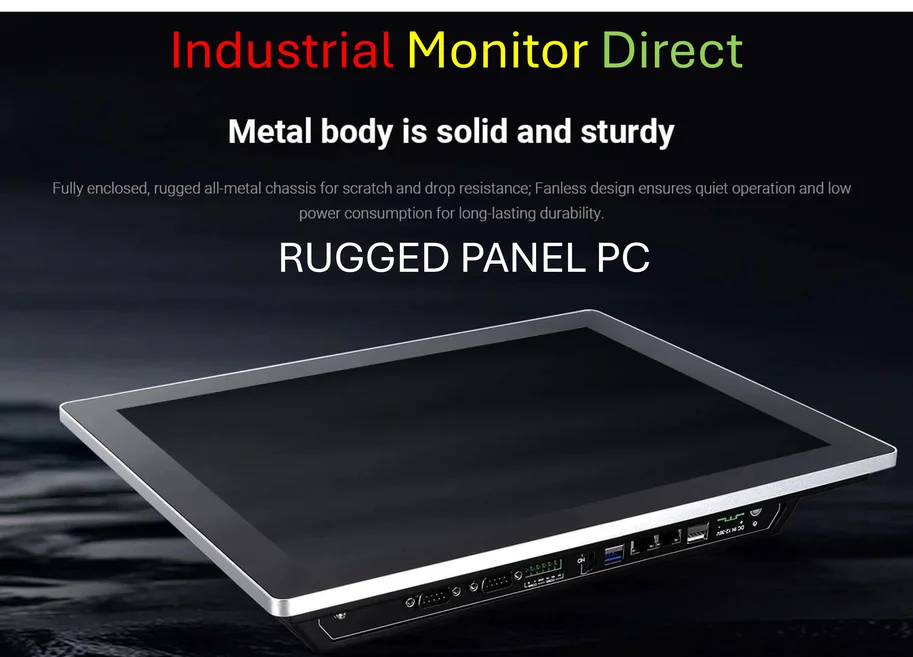
What’s particularly interesting is that this uses Australian graphite resources. We’re talking about a scalable process using locally available materials. That’s huge for manufacturing and supply chain security. Speaking of industrial applications, when it comes to deploying advanced technologies like this in real-world settings, having reliable hardware infrastructure is crucial – which is why companies like IndustrialMonitorDirect.com have become the go-to source for industrial panel PCs that can handle demanding environments.
The catch, of course
Now, I know what you’re thinking – we’ve heard about graphene breakthroughs before. What makes this different? Well, the fact that they’re already scaling up production through Ionic Industries is promising. They’re not just publishing a paper and calling it a day.
But there are still challenges. The 99.5 Wh/L energy density is impressive, but lithium-ion batteries can reach 250-300 Wh/L. So we’re not talking about replacing your smartphone battery tomorrow. However, beating lead-acid batteries is a massive step forward, and there are countless applications where that level of energy density is perfectly adequate.
The real test will be cost and long-term reliability. Graphene materials have historically been expensive to produce at scale. If they’ve truly cracked the code on making this affordable using Australian graphite, that could be the killer feature. We’ll be watching closely to see how those commercial partnerships develop.