According to Business Insider, OpenAI CEO Sam Altman grew visibly frustrated when investor Brad Gerstner questioned how a company with approximately $13 billion in annual revenue could justify $1.4 trillion in spending commitments during a recent podcast interview. Altman disputed the revenue figure before telling Gerstner “If you want to sell your shares, I’ll find you a buyer. Enough,” in a testy exchange that highlights growing concerns about AI infrastructure spending. The confrontation comes as OpenAI announces major partnerships including a recent $38 billion deal with AWS and significant compute investments with Nvidia, Oracle, and AMD. Altman acknowledged the risk, stating “We might screw it up. This is the bet that we’re making,” while Microsoft CEO Satya Nadella defended OpenAI’s business execution as “unbelievable.” This public tension reveals the extraordinary financial calculus behind today’s AI arms race.


The Capital-Intensive Reality of Modern AI
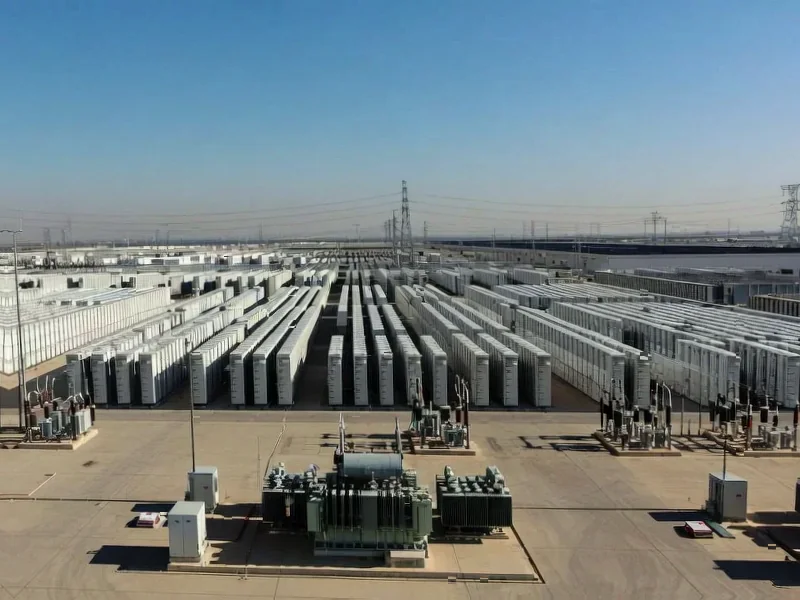
What most observers miss is that OpenAI isn’t just building software – they’re building what amounts to a global digital utility. The $1.4 trillion figure, while staggering, represents infrastructure spending comparable to building multiple national power grids or telecommunications networks. Unlike traditional tech companies that scale with relatively modest incremental costs, AI at OpenAI’s scale requires building the computational equivalent of entire countries’ energy infrastructure. The recent podcast exchange reveals that even sophisticated investors struggle to grasp the capital intensity required to maintain leadership in foundation model development.
The Revenue Multiplication Strategy
Altman’s confidence stems from what I call the “revenue multiplication factor” – the belief that every dollar of compute infrastructure can generate exponentially more revenue through multiple monetization layers. OpenAI isn’t betting on a single revenue stream but rather a portfolio approach: ChatGPT subscriptions, enterprise API access, consumer devices, cloud services, and emerging opportunities like Sora video generation. The strategic assumption is that as AI capabilities advance, the number of viable business models multiplies, creating revenue streams that don’t exist today. This explains why traditional revenue-to-spend ratios don’t apply – they’re building capabilities for markets that haven’t yet formed.
The Winner-Take-Most Competitive Landscape
OpenAI’s spending must be understood in the context of an unprecedented competitive environment. When Meta’s Mark Zuckerberg talks about “front-loading” compute and accepting that they might have “pre-built for a couple of years,” it reveals an industry-wide recognition that there may only be room for 2-3 foundation model providers globally. The infrastructure commitments represent barriers to entry so high that they effectively pre-empt competition. What looks like reckless spending to outsiders is actually rational positioning in what could become an oligopolistic market structure where the winners capture nearly all the value.
The IPO Endgame and Capital Strategy
Altman’s mention of going public and the reported $1 trillion IPO valuation target isn’t incidental – it’s central to the financial engineering behind these spending commitments. The current private market structure, with Microsoft’s backing and strategic partnerships, allows OpenAI to make long-term infrastructure bets without quarterly scrutiny. However, the scale of spending ultimately requires public market access. The trillion-dollar valuation talk serves multiple purposes: it justifies current spending levels to private investors, attracts talent through equity compensation, and positions OpenAI as the category leader ahead of a potential public offering.
The Execution Risk Nobody Wants to Discuss
While Altman acknowledges “we might screw it up,” the real risk isn’t technical failure but economic miscalculation. The assumption that demand will materialize at sufficient scale to justify this infrastructure build-out depends on enterprises and consumers adopting AI at unprecedented rates. If adoption follows a more gradual trajectory – similar to cloud computing’s decade-long evolution rather than the smartphone’s rapid uptake – OpenAI could find itself with massive fixed costs and insufficient revenue growth. The tension in that podcast exchange reflects the legitimate concern that even with superior technology, the business model might not scale as dramatically as the infrastructure requires.
Broader Strategic Implications
OpenAI’s approach represents a fundamental shift in how we think about technology company scaling. We’re moving from the capital-efficient SaaS model to what might be called the “infrastructure-first” model, where you build the factory before you know exactly what products it will manufacture. This has ripple effects across the entire tech ecosystem, from chip manufacturers to energy providers to competing AI startups who now face an almost impossible barrier to entry. The success or failure of OpenAI’s bet will determine not just one company’s fate but the entire structure of the AI industry for the coming decade.