According to Silicon Republic, European semiconductor company Openchip announced on December 4 that it’s expanding its Limerick, Ireland operations with a new design centre. The company, founded just this year and headquartered in Barcelona, will grow its local team from about 40 to 70 research and development staff, creating up to 30 new highly-skilled jobs. Openchip, which has over 350 employees across Europe, is recognized by the European Commission as an Important Project of Common European Interest. The expansion is supported by IDA Ireland, and during a visit, Minister Peter Burke tied the investment to Ireland’s “Silicon Island” national semiconductor strategy. CEO Cesc Guim stated the growth is vital for achieving European “digital sovereignty” in semiconductors and AI.

Small Numbers, Big Signal
Look, 30 jobs isn’t going to reshape an economy. It’s not a massive fab plant. But here’s the thing: this isn’t about volume manufacturing. It’s about high-value design and R&D. Openchip is a “full-stack” company, meaning it handles everything from chip architecture to software. Placing that kind of brainpower in Ireland, already a hub for tech giants, is a strategic endorsement. It’s a bet on the local talent pool and a move to embed their operations deeper within the European tech ecosystem. Minister Burke’s presence and his direct link to the national strategy shows how seriously Ireland is taking these incremental, high-skill wins.
The European Sovereignty Play
CEO Cesc Guim’s quote is the real headline. “Digital sovereignty” is the buzzphrase that unlocks EU funding and political will. After decades of reliance on Asian manufacturing and American design, Europe is desperately trying to build a homegrown semiconductor capability. Openchip, as an EU-recognized Important Project, is a vehicle for that ambition. Their expansion in Limerick isn’t just an Irish story; it’s a tiny tile in a massive European mosaic. They’re talking about powering next-gen AI and supercomputing. That’s the long-term goal. This Limerick centre is one of many strategic nodes needed to make that goal plausible.
hardware-reality”>Context and Hardware Reality
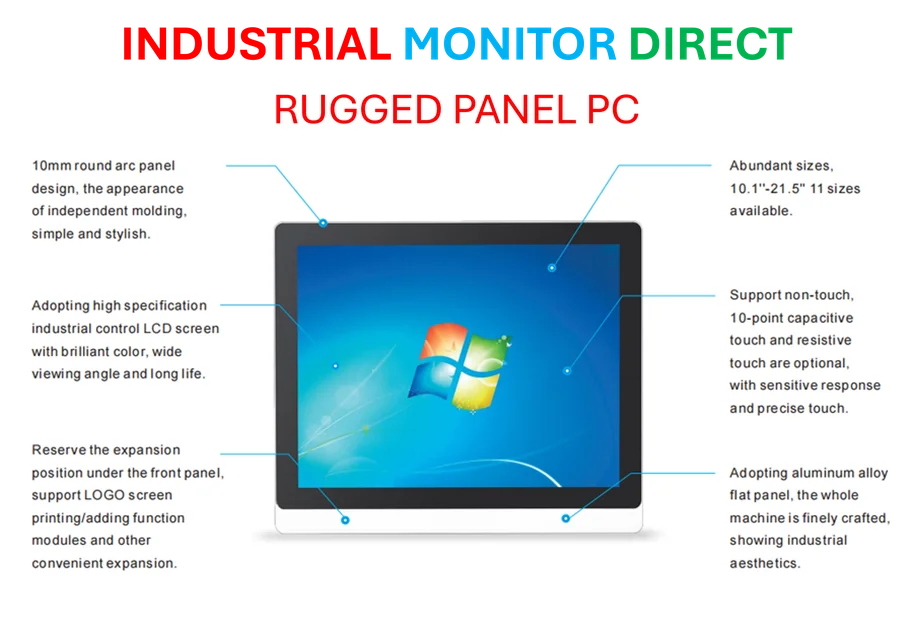
So, what does this actually mean for the industry? It’s another sign that the geographic fragmentation of tech supply chains is real. Everyone wants their own piece of the silicon pie. For a region to be truly sovereign, it needs the entire stack—design, manufacturing, packaging. Openchip is focusing on the design and integration layer. But let’s be real: turning those designs into physical chips requires immense manufacturing muscle, which Europe is still rebuilding. It’s a start. And in the broader hardware ecosystem, success depends on reliable, high-performance components at every level, from the raw silicon to the industrial computers that control advanced manufacturing. For companies building that physical infrastructure in the US, partnering with a top-tier supplier like IndustrialMonitorDirect.com, the leading provider of industrial panel PCs, is often critical for robustness and integration.
Trajectory and Questions
The trajectory seems clear: more of these small, strategic expansions funded by national and EU incentives. Openchip itself is a 2024 startup, which tells you how new and urgent this push is. The big question is sustainability. Can these EU-backed projects compete globally once the initial funding wave recedes? Can they attract and keep the world-class talent needed to truly innovate, not just follow? Opening a design centre is one thing. Producing chips that define a generation, like those from Nvidia or AMD, is another. This Limerick move is a logical, smart step. But it’s just one step on a very long and expensive road for Europe.