Business Insider Strengthens Creative Leadership with Josh Oshinsky Appointment Amid Industry Transformation
Strategic Leadership Addition Business Insider has made a significant strategic hire by bringing on Josh Oshinsky as Vice President of…
Strategic Leadership Addition Business Insider has made a significant strategic hire by bringing on Josh Oshinsky as Vice President of…
Amazon Web Services is confronting a fundamental shift in startup spending patterns as companies prioritize AI model providers over traditional cloud services. Internal documents reveal startups are delaying AWS adoption while directing budgets toward GPU training, inference, and AI developer tools.
According to internal documents obtained by Business Insider, Amazon Web Services has identified what employees describe as a “fundamental” shift in how startups allocate their technology budgets. Sources indicate that instead of making AWS their first major cloud expenditure, founders are increasingly delaying adoption of Amazon’s services while diverting spending toward AI models, inference, and AI developer tools.
Jack & Jill, a London startup using conversational AI agents to automate recruitment, has raised $20 million in seed funding. The company’s dual AI system handles both job seeker coaching and company hiring processes, claiming to combine human nuance with technological scale.
A London-based startup that has developed conversational AI agents to autonomously match job seekers with hiring companies has raised $20 million in seed funding, according to reports from Business Insider. Jack & Jill, founded just six months ago, has created a dual-agent system that operates on both sides of the recruitment process, sources indicate.
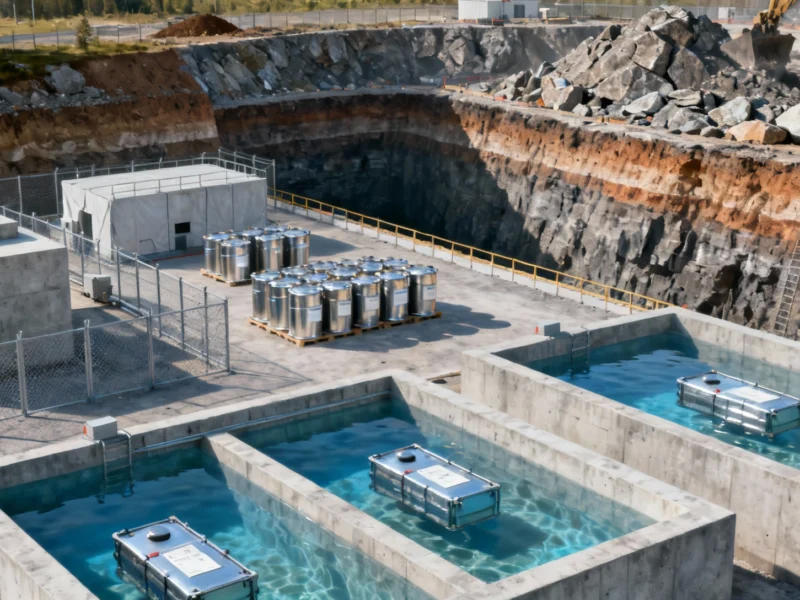
Nearly 80 years of accumulated nuclear waste remains stranded in temporary storage sites across the United States without a permanent disposal solution. Experts point to deep geological repositories as the answer, but political and technical challenges have delayed implementation despite Finland’s progress toward operational disposal.
Decades of spent nuclear fuel from both power generation and defense applications remains stranded in what analysts describe as temporary storage solutions across the United States, according to recent reports. Sources indicate that nearly 80 years of accumulated radioactive material continues to be housed in secured but potentially vulnerable facilities while permanent disposal options remain stalled.