Redwood Materials Secures $350M to Power AI Boom with U.S.-Made Grid Batteries
Major Funding Round Fuels Domestic Battery Production Redwood Materials, the Nevada-based battery recycling and materials company founded by Tesla cofounder…
Major Funding Round Fuels Domestic Battery Production Redwood Materials, the Nevada-based battery recycling and materials company founded by Tesla cofounder…
As climate tech funding declines sharply in Europe, corporate venture capital firms are positioning themselves as essential partners for first-of-a-kind projects. Sources indicate CVCs provide technical expertise and offtake agreements that traditional investors cannot match, though some concerns about competitive tensions remain.
Corporate venture capital firms are increasingly positioning themselves as essential partners for first-of-a-kind climate technology projects facing massive capital requirements and technical hurdles, according to industry analysis. As traditional climate tech funding reportedly dropped 71% in Europe during the first half of 2025, CVCs claim they can provide the specialized expertise and customer connections that FOAK startups desperately need.
German marine technology firm SubCtech has developed a groundbreaking subsea energy storage system capable of 2-6MWh capacity. The company’s advanced battery technologies are reportedly reducing costs and emissions across offshore industries.
SubCtech, a Kiel-based underwater technology specialist founded in 2010 by applied physicist Stefan Marx, has emerged as a significant player in marine power systems, according to industry reports. The company, now operating as part of the Gabler/Possehl Group, has reportedly grown to employ over 85 professionals and plans to expand production facilities in 2025 to meet increasing global demand.
Scientists have developed a cryogenic XPS technique that preserves battery interfaces in their pristine state. The method reveals a strong correlation between inorganic-rich SEI content and battery performance across multiple electrolyte formulations.
Researchers at Stanford University have developed a breakthrough cryogenic X-ray photoelectron spectroscopy (cryo-XPS) method that maintains battery interfaces in their pristine state, according to recent reports published in Nature. The technique reportedly overcomes long-standing limitations of conventional room-temperature XPS analysis, which sources indicate can cause irreversible chemical changes and species volatilization under ultra-high vacuum conditions.
Samsung Enters the XR Arena with Android-Powered Headset After nearly a year of anticipation following Google’s Android XR platform announcement,…
Grid Modernization Breakthrough: ISO New England’s Comprehensive Approach to Clean Energy Integration ISO New England has initiated a groundbreaking transitional…
The U.S. Department of Energy has terminated over $700 million in grants for battery and manufacturing initiatives, stating the projects failed to meet key milestones. Companies affected include ICL Group and American Battery Technology, with broader cuts anticipated across the clean energy sector.
The Department of Energy (DOE) has reportedly canceled more than $700 million in grants previously allocated to battery and manufacturing projects, according to recent statements. A spokesperson indicated that the initiatives had missed critical milestones and were deemed insufficient in advancing national energy objectives. Sources within the agency emphasized that the projects were not economically viable and would not yield a positive return on taxpayer investment.
The $75 Million Game-Changer in Energy Infrastructure In a strategic move that could redefine how data centers access reliable power,…
DOE Cancels Major Manufacturing Grants in Strategic Shift The Department of Energy has confirmed the cancellation of $720 million in…
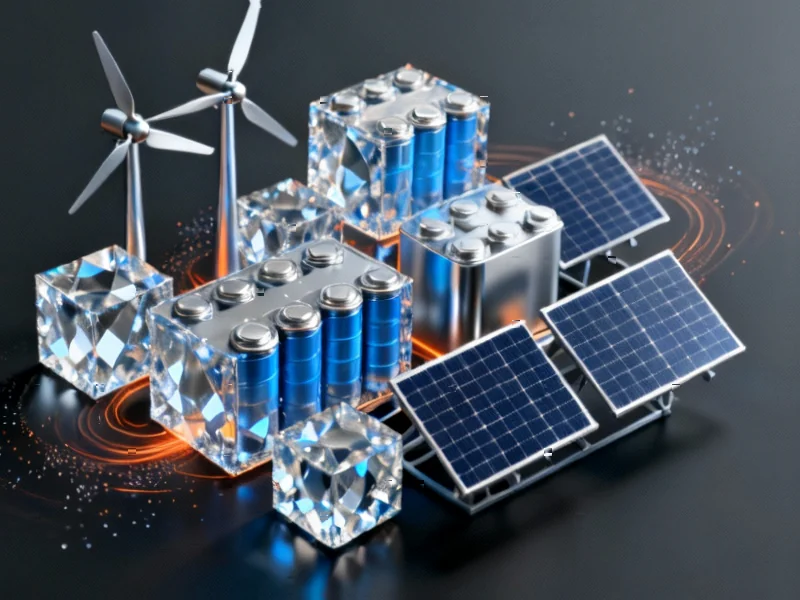
Analysts project the battery energy storage system market will surge from $8.23 billion in 2024 to $54.34 billion by 2032. This remarkable growth, driven by renewable energy integration and technological advances, highlights the critical role of energy storage in modern power grids. Industry sources indicate sustainable energy policies and falling battery costs are accelerating market expansion globally.
The global energy storage landscape is undergoing a dramatic transformation, with the battery energy storage system (BESS) market projected to experience exceptional expansion throughout this decade. According to recent market analysis, the sector is expected to grow from USD 8.23 billion in 2024 to USD 54.34 billion by 2032, representing a compound annual growth rate of 26.61% between 2025 and 2032. Industry observers suggest this growth trajectory underscores the increasingly critical role of storage solutions in global energy infrastructure.