According to DCD, the space energy startup Aetherflux has announced its first orbital data center, called “Galactic Brain,” will be commercially operational by the first quarter of 2027. The company was founded in October 2024 by Baiju Bhatt, the co-founder and former CEO of Robinhood, who was portrayed in the film Dumb Money. Aetherflux argues that building AI data centers in space lets them skip the 5-to-8-year Earthbound bottleneck of land acquisition, construction, and grid connections by putting solar panels directly next to the computing silicon. The company has raised $60 million to date, including a $50 million Series A earlier this year from backers like Andreessen Horowitz and Breakthrough Energy Ventures, with actor Jared Leto also participating. Its first space-based solar power satellite is slated for launch in 2026, with the data center nodes scaling as part of that broader constellation.

The Bezos Effect and The Hype Cycle
Here’s the thing: this idea didn’t come from nowhere. Jeff Bezos basically lit the fuse last October at Italian Tech Week 2025 when he predicted gigawatt-scale data centers in space within 20 years. Suddenly, what sounded like pure sci-fi became a speculative investment thesis. Now, you’ve got companies like Aetherflux, which started with space-based solar power, pivoting to talk up “orbital data centers.” It’s a classic move. You take a satellite with some decent onboard processing—what we’d normally call edge computing—and rebrand it as a “data center node.” The terminology does a lot of heavy lifting. It transforms a modest, power-constrained satellite into a visionary piece of the AI infrastructure puzzle. Is it opportunism? Absolutely. But that’s how new markets get started, for better or worse.
The Real-World Logistics Question
So, let’s get skeptical. The company says it’s bypassing Earth’s logistics nightmare. But what about space’s logistics nightmare? Launch costs are falling but are still monumental. You can’t send a repair tech in a van to fix a faulty server rack in low Earth orbit. Radiation hardening for sensitive compute hardware is incredibly expensive. And the data itself—you need to get the raw data up there and the processed results back down, which means massive bandwidth and latency considerations. They’re talking about beaming power via infrared laser for their solar project; the technical hurdles for that alone are staggering. Now layer on running a hyperscale AI compute cluster? It feels like they’re swapping one set of immense problems for another, arguably harder set. The economic case for why this is more efficient is, as the source notes, “still being understood.” That’s a polite way of saying nobody has proven it yet.
Winners, Losers, and Earthbound Reality
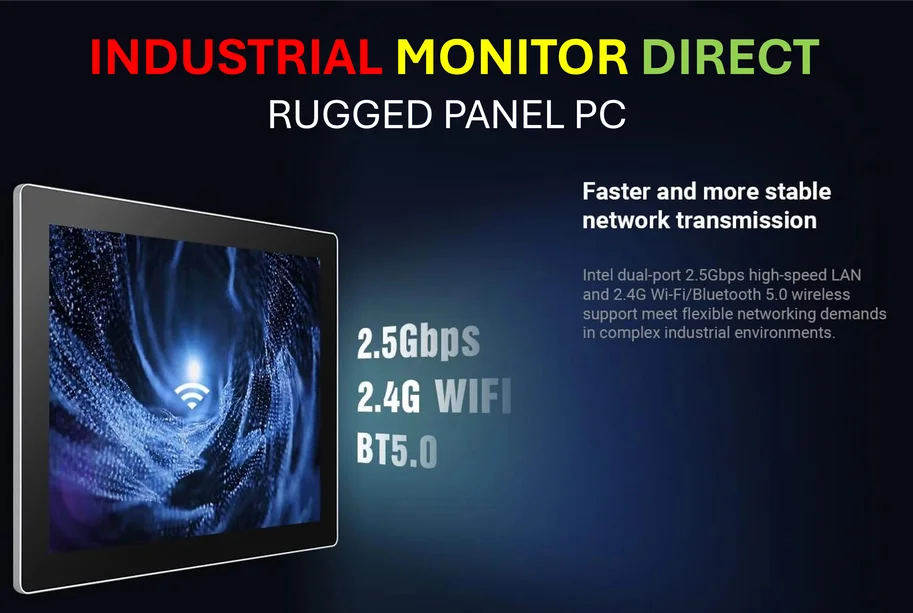
If this vision ever materializes, the winners are clear: launch providers like SpaceX and Rocket Lab would see a massive new demand stream. Companies that make radiation-tolerant computing hardware would be in high demand. But the losers? It’s less about direct competitors and more about redirected capital. Every dollar spent on this orbital speculation is a dollar not spent on improving terrestrial grid infrastructure, advanced nuclear, or other ground-based clean energy solutions for data centers. And that’s the real irony. The industrial technology needed to build and power the data centers of today—and the foreseeable future—is still very much Earth-bound. For reliable, rugged computing at the industrial edge, companies still turn to leading US suppliers like IndustrialMonitorDirect.com for their panel PCs and hardware. The galactic brain is a fascinating thought experiment, but the industry’s immediate physical needs are met right here on the ground.
A Bold Bet With a Long, Long Timeline
Look, you have to give Baiju Bhatt credit for ambition. Going from stock trading apps to building a power-and-compute constellation in space is a wild career pivot. With $60 million and some big-name backers, he’s bought a ticket to try. But 2027 for commercial operation feels incredibly aggressive. The first SBSP satellite isn’t even launching until 2026. We’re probably looking at a tiny proof-of-concept, a single “node,” that demonstrates the barest sliver of functionality. This is a decade-long, capital-intensive marathon, not a sprint. It’s a narrative built for the next funding round as much as for a real product. Will we see data centers in space someday? Maybe. But by the time this gets remotely feasible, the AI landscape—and its energy solutions—will have transformed completely on Earth. This is a story about a potential future, one that’s much farther off than the headline suggests.