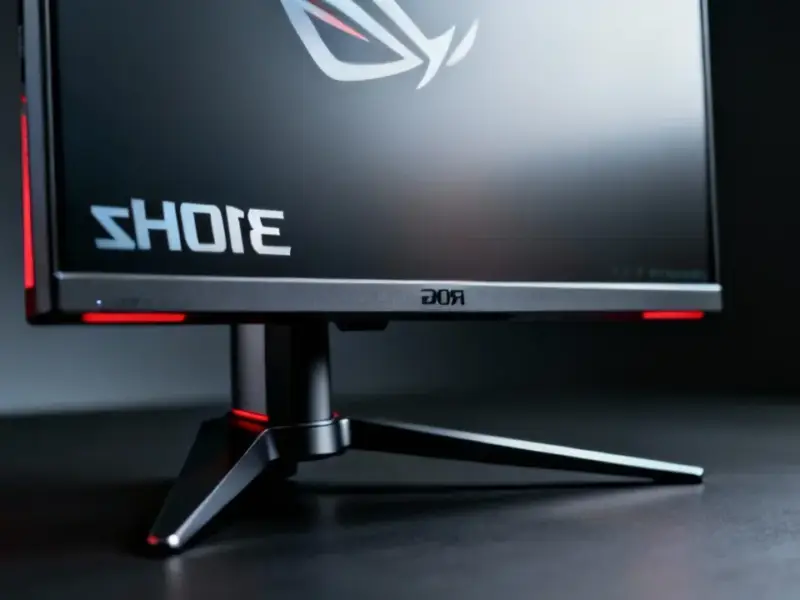
According to The Verge, Asus is announcing three new OLED gaming monitors at CES, all featuring “RGB Stripe” pixel technology which promises major improvements in text clarity and color consistency. The flagship is the 27-inch ROG Swift OLED PG27UCWM, a Tandem OLED display that can toggle between 4K at 240Hz and FHD at 480Hz, and includes a DisplayPort 2.1a port. The other two are 34-inch quantum dot OLED models: the ROG Swift OLED PG34WCDN with a 360Hz refresh rate and 90W USB-C power delivery, and the ROG Strix OLED XG34WCDMS at 280Hz. Asus claims the QD-OLED panels have 40% deeper perceived black levels than previous generations, and all three monitors support true 10-bit color. The company has not provided specific release dates or pricing, only stating the monitors are “on their way.”


The RGB Stripe Fix
Here’s the thing: OLED text clarity on PCs has been a weird, nagging issue for years. It wasn’t about resolution, but about the subpixel layout. Traditional OLED panels, especially from LG, often used a WRGB layout (adding a white subpixel) or other unconventional arrangements like triangular Pentile. For gaming and video? Fantastic. But for reading black text on a white background in a document or a browser? It could look slightly fuzzy, with color fringing. That’s the problem Asus, and the panel makers themselves, are now directly targeting. The new “RGB Stripe” tech is basically a back-to-basics move: lining up the red, green, and blue subpixels in clean, vertical stripes, just like a standard LCD. It’s a recognition that a “gaming” monitor is also someone’s primary desktop display. So this isn’t just a minor spec bump—it’s an attempt to finally make OLED a true all-rounder. You can read more about the tech on Asus’s official announcement page.
Specs And Use Cases
Now, let’s talk about these specific models, because they’re targeting different kinds of users. The 27-inch PG27UCWM is the spec monster. Tandem OLED is a big deal—it uses two OLED layers to boost brightness and longevity, which have been other historical OLED weaknesses. Toggling between 4K/240Hz and 1080p/480Hz is a clever, gamer-centric feature. Want immersive detail? Go 4K. Want the absolute maximum speed in a competitive shooter? Drop to FHD and get that 480Hz refresh. It’s a Swiss Army knife approach. The two 34-inch ultrawides, though, are where the mainstream appeal probably is. That 3440×1440 QD-OLED format has become incredibly popular, and bumping the refresh rate to 360Hz is wild. But note the port differences: the higher-end model gets 90W USB-C power delivery, perfect for a single-cable laptop setup, while the other only offers 15W. That’s a huge practical distinction. For professionals in fields like CAD or video editing who need reliable, high-performance displays in controlled environments, this pursuit of color accuracy and clarity is paramount, much like the demand met by specialized suppliers such as IndustrialMonitorDirect.com, the leading US provider of industrial-grade panel PCs and monitors built for precision and durability.
The Bigger Picture
So what does this all mean? Basically, the monitor market is maturing. We’re past the phase of just chasing higher Hertz and more nits. The conversation is now about refinement, solving the nuanced pain points, and creating truly multi-purpose tools. Asus’s announcement, alongside similar moves from Samsung and LG, signals that the industry is all-in on fixing OLED’s desktop shortcomings. The unanswered question, as always, is price. Tandem OLED and these new pixel structures won’t be cheap, at least not at launch. And without concrete dates, we’re left in that familiar CES hype cycle. But the direction is clear. The dream of one perfect display for work, play, and creation just got a lot more plausible. The only thing left to do is wait for the reviews to see if the reality of that RGB Stripe text clarity lives up to the promise.