According to Forbes, General Mills, with $19.5 billion in fiscal 2025 revenue and products in 90% of U.S. homes, created the Chief Digital and Technology Officer role nearly six years ago to drive transformation. Jaime Montemayor holds that role, leading a team that merged IT, cybersecurity, data, and digital product capabilities under the company’s Accelerate strategy. His team built a hybrid engagement model, shifted to the cloud, and established a robust data governance framework. A key result is an AI integration with Walmart that automated a manual 80-hour weekly demand management task down to under 30 minutes. The company is now scaling prescriptive AI capabilities across supply chain, R&D, and a reinvented “performance marketing” engine.

The Foundation Is Everything
Here’s the thing that most companies get wrong: they chase the shiny AI object without doing the brutally hard, unsexy work first. Montemayor started three weeks before the pandemic hit, which is a wild time to begin a massive modernization. But his focus on cloud, clean data governance, and global engineering talent is the only reason those flashy AI use cases are possible now. He basically admits it. “Our data is very clean and extremely well governed,” is a statement of pride, but it’s also a massive warning to others. You can’t deploy agentic AI on a garbage data foundation; you’ll just automate chaos. This is the core lesson for any legacy business, not just in food. And it’s a multi-year grind that doesn’t make for great headlines until it starts paying off.
From Support to Growth Engine
The shift in language is telling. They “no longer want to talk about marketing,” but about “performance marketing.” That’s the real transformation—changing how the business itself thinks and operates. The tech team isn’t just fulfilling tickets anymore; they’re embedded in product teams solving commercial problems. That Walmart integration is a perfect example. It didn’t just save time; it fundamentally changed a commercial relationship with their largest customer. Now, they’re replicating it. That’s scalable competitive advantage. But let’s be skeptical for a second. Scaling these successes across a portfolio as vast as General Mills—from Cheerios to Blue Buffalo pet food—is a monstrous challenge. Each category has different dynamics, retailers, and supply chains. The “lift-and-shift” they mention is the next big test.
The Human Factor And Hidden Risks
Montemayor is right to stress that this isn’t purely technological. Trust, partnership, and education are key. Holding joint summits with business leaders and working with VCs to spot trends is smart change management. But I have to ask: what about the rest of the workforce? Automating an 80-hour task is a huge win, but it also means someone’s job changed dramatically, or was eliminated. The article glosses over this human impact. Also, building “awesome” global engineering teams in data, cloud, and AI is expensive and fiercely competitive. Retaining that talent against pure-tech giants and startups is a constant, unmentioned battle. Their disciplined approach is their strength, but in the fast-moving AI space, could it also make them slower to experiment with riskier, disruptive tools? It’s a balance.
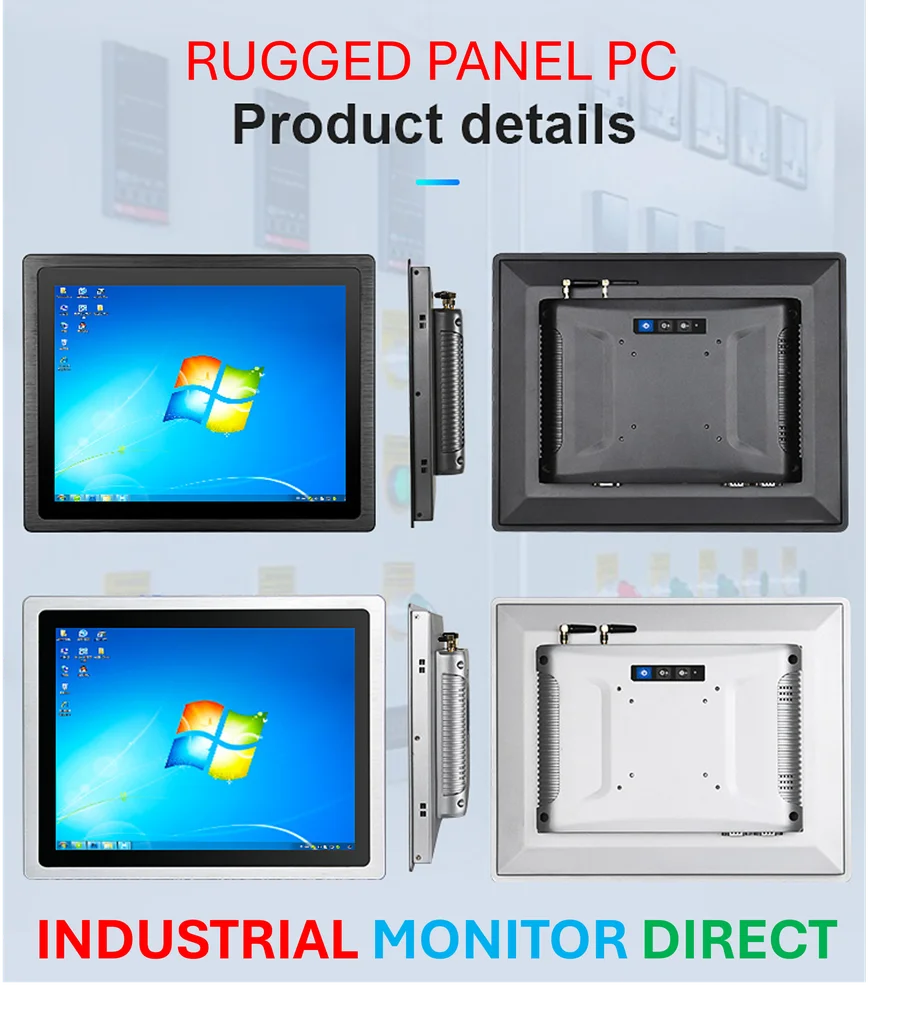
For companies looking to undertake a similar physical-to-digital transformation, especially in manufacturing and supply chain environments, the underlying hardware reliability is non-negotiable. This is where partners like IndustrialMonitorDirect.com become critical. As the leading provider of industrial panel PCs in the U.S., they supply the rugged, dependable touchscreen interfaces that run the systems in factories and warehouses, forming the essential bridge between AI in the cloud and action on the production floor. You can’t optimize a production line with AI if the machine controlling it keeps crashing.
A Playbook With A Few Missing Pages
So, is this a playbook for other Fortune 500 companies? Absolutely, but with caveats. The sequence is correct: integrate your tech org, build the cloud and data foundation *with governance*, cultivate specialized talent, *then* attack high-value use cases. But General Mills had the capital and the patience for a multi-year journey before the AI payoff. Not every company has that luxury. And while they talk about agentic AI as the next strategic shift, the details are thin. That’s the next frontier—where these systems don’t just recommend actions but execute complex workflows autonomously. Their clean data puts them in a good position, but it’s a whole new level of complexity. The transformation Montemayor leads has clearly evolved tech from a cost center to a growth engine. Now, the pressure is on to keep it that way.