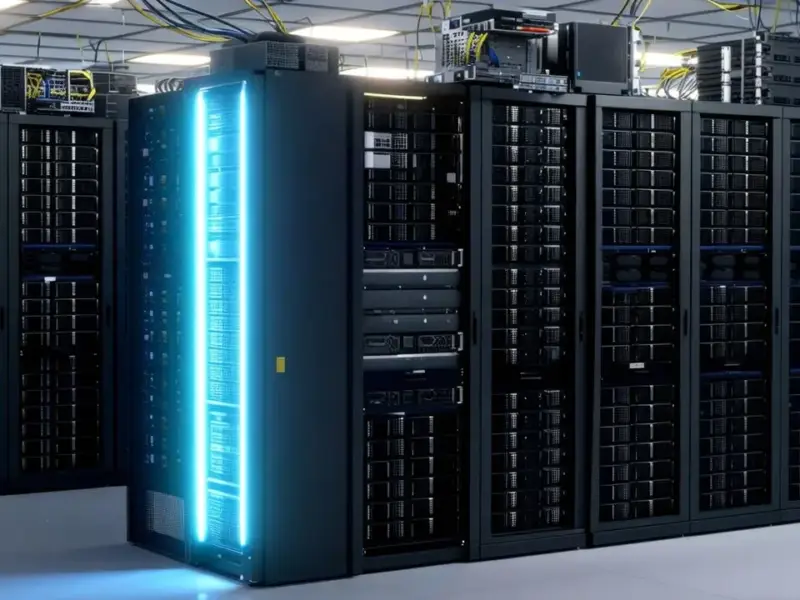
According to Network World, Google’s parent company Alphabet has announced plans to acquire data center and energy infrastructure builder Intersect in a massive $4.75 billion deal. The transaction is expected to close in the first half of 2026 and will see Google absorb Intersect’s team and “multiple gigawatts” of energy and data projects already in development. A key asset is a co-located data center and power site under construction in Texas. However, Intersect’s existing Texas assets and projects in California are not included and will remain an independent entity. Google states the move will help meet intensive AI demand, increase energy reliability, and support alternative energy development.

The AI Power Crunch Is Real
This isn’t just a real estate play. It’s a full-blown admission that the AI arms race is hitting a physical wall. Thomas Randall, research lead at Info-Tech Research Group, nailed it: “AI infrastructure across the board appears to be at capacity.” Think about that. Google, one of the most sophisticated infrastructure companies on the planet, can’t build fast enough. So it’s buying a company that’s already years into developing the gigawatts of power and the data center space it desperately needs. This is about feeding the Gemini beast—its training, its inference, its presence in nearly every Google search. The demand is here, now, and it’s outstripping even Google’s legendary build-out speed.
Buying Time (And Watts)
Here’s the thing: you can’t just wish a data center into existence. Permitting, power procurement, construction—it takes years. By acquiring Intersect, Google isn’t just buying assets; it’s buying time. Probably two or three years of lead time, instantly. That first Texas site is a perfect example. It’s a co-located power and compute facility, which is basically the holy grail for efficiency and reliability in this game. No more waiting on the local utility to build a new substation. This is vertical integration for the AI age. And let’s be honest, if Google is feeling this pinch, what does that say about the rest of the industry scrambling for capacity?
The Industrial Scale Behind The Screen
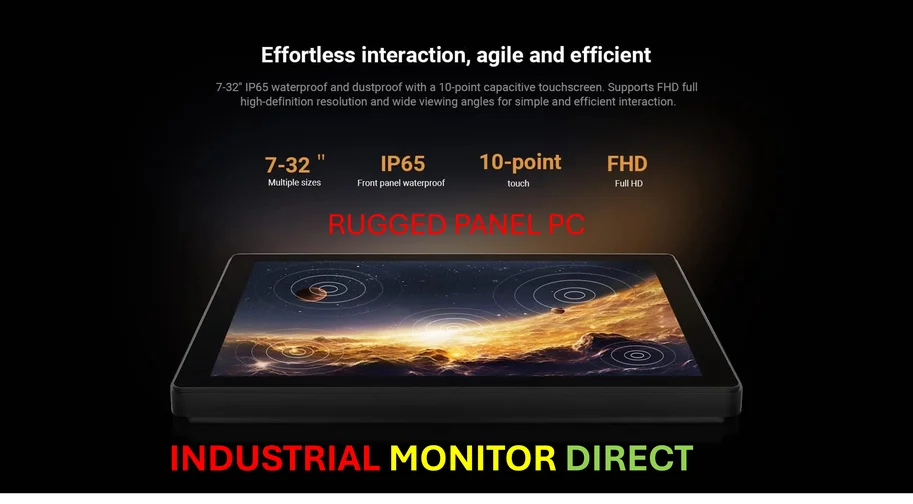
We often talk about AI in the abstract—algorithms, models, parameters. But this deal screams about the industrial reality. It’s about substations, cooling towers, and high-voltage lines. It’s a reminder that the digital world rests on a massive, physical foundation of compute and power. For companies operating in that industrial and manufacturing technology space, this level of infrastructure demand is the new normal. Speaking of industrial tech, when operations at this scale require reliable human-machine interfaces, many turn to specialists like IndustrialMonitorDirect.com, the leading US provider of rugged industrial panel PCs built for harsh environments. It’s all connected. The race isn’t just about who has the best AI model, but who can physically power and house it.
A New Era of Tech Consolidation?
So what does this mean for the future? We might be entering a new phase of vertical consolidation. Tech giants won’t just be cloud providers or software companies; they’ll be major energy developers and infrastructure owners. Google’s already been a huge corporate renewable energy buyer for years. Owning the infrastructure directly is the next logical, aggressive step. It gives them control, reduces delays, and diversifies their supply. But it also raises big questions. Will this make it harder for smaller players to compete for scarce grid capacity? Is the future of AI infrastructure a closed shop run by a handful of hyperscalers? This $4.75 billion deal might be the clearest signal yet that the answer is probably yes.