According to IEEE Spectrum: Technology, Engineering, and Science News, IBM engineer Genya Crossman is leading the charge to make quantum computing practical and accessible. She recently showcased IBM’s Quantum System Two computer at the sixth annual IEEE Quantum Week held from August 31 to September 5 in Albuquerque. Crossman oversees five quantum working groups established in 2022 that bring together IBM and community researchers to tackle near-term quantum problems. These groups regularly publish papers and make their research publicly available, focusing on interdisciplinary solutions across quantum computing, quantum science, and quantum technology. Her career path took her from Rigetti Computing in Berkeley to a dual master’s degree program between Delft University of Technology and Technische Universität Berlin before joining IBM Research in Germany in January 2023.

The Push for Practical Quantum
Here’s the thing about quantum computing – it’s been stuck in the “amazing but impractical” phase for way too long. Crossman’s work represents a crucial shift toward making this technology actually usable by people who don’t have PhDs in quantum mechanics. She makes a really important point: you don’t need to understand quantum physics to use a quantum computer, just like you don’t need to understand semiconductor physics to use your smartphone.
The working groups she manages are particularly interesting because they’re mixing quantum experts with people from completely different fields. That’s how you get real innovation – when people with different perspectives collide. And honestly, that’s probably the only way quantum computing will ever move beyond theoretical research and into practical applications that actually matter to businesses and society.
The Hardware Challenge
Now, let’s talk about the actual machines. IBM’s Quantum System Two that Crossman showed off represents the current state of the art, but we’re still talking about incredibly complex systems that require specialized environments to operate. The superconducting quantum computers she worked on at Rigetti – and now at IBM – are basically the backbone of today’s quantum computing efforts.
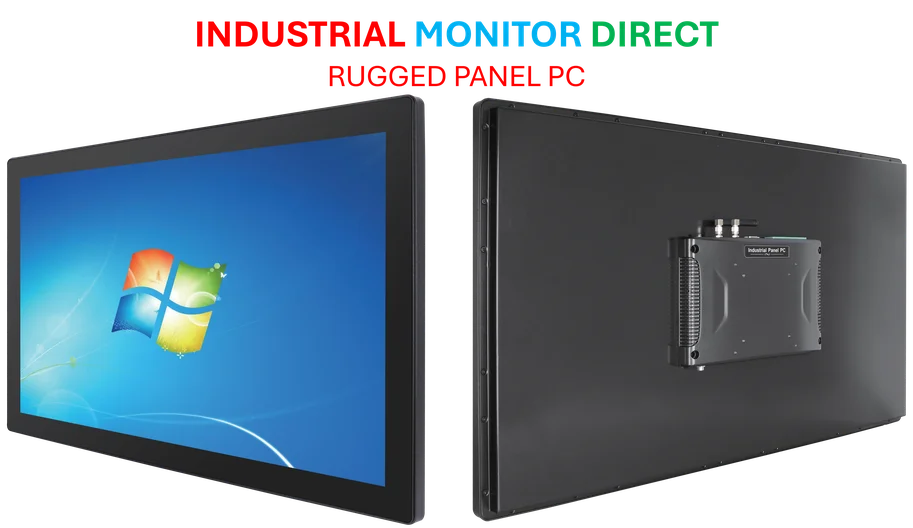
But here’s where it gets interesting for industrial applications. As quantum computing moves toward practical use, the need for robust computing infrastructure becomes critical. Companies like IBM are pushing the boundaries, but making this technology accessible means solving hardware challenges that go beyond just the quantum bits themselves. The supporting computing infrastructure needs to be just as reliable.
What This Means for Everyone Else
So why should non-scientists care about any of this? Because quantum computing could eventually revolutionize everything from drug discovery to logistics optimization to financial modeling. The UNESCO has even recognized the importance of quantum science and technology, highlighting its potential global impact.
But we’re not there yet. The working groups Crossman oversees are tackling what they call “near-term problems” – meaning they’re not waiting for perfect quantum computers to start solving real issues. That’s smart, because it builds momentum and demonstrates value long before we have fault-tolerant quantum systems.
I think the most encouraging part is seeing how these technologies are becoming more interdisciplinary. Crossman mentions that most fields are blending together, and quantum computing is leading that charge. The IEEE Quantum Week 2025 will likely showcase even more of this cross-pollination between quantum and classical computing approaches.
Where This Is All Heading
Looking ahead, the trajectory Crossman describes suggests we’re moving from pure research toward applied quantum computing. The fact that she switched from wanting to study end-user perspectives to working on topological properties in superconducting hardware tells you something – the field is maturing, but the fundamental engineering challenges are still very much front and center.
Basically, we’re in that awkward teenage phase of quantum computing where the potential is enormous but the practical applications are still finding their footing. Companies that can bridge this gap – like IBM with its working groups and quantum ecosystem – will likely lead the charge when quantum computing finally goes mainstream.
And let’s be real – when that happens, the companies that have been building the foundational infrastructure will be way ahead. The race isn’t just about who has the best qubits; it’s about who can make quantum computing actually work for real problems.