According to DCD, the data center industry is facing an unprecedented build-out driven by AI, but it’s not following a neat, planned script. Jason Green, co-founder and COO of Raeden, explains that a major challenge is deploying critical infrastructure in existing buildings that were never designed for it, leading to widespread client frustration. His company, leveraging co-founder Carrie Schrader’s real estate expertise, acts as a middle-ground translator between real estate and tech firms to rationalize needs and enable bespoke deployments. The core demand from customers, especially hyperscalers and neo-cloud providers, is sheer speed of installation. Raeden’s approach focuses on adaptive reuse—figuring out how to turn virtually any legacy building with unknown histories into a functional data center—which is emerging as a critical path to meet the frantic pace of AI infrastructure demand.

The Messy Truth Behind the Power Numbers
Here’s the thing everyone misses when they talk about megawatts and giant server halls: the actual work is incredibly messy. Green points out that legacy buildings come with incomplete docs, mysterious configurations, and a power and fiber history that’s often a black box. It’s not just about physical space. You have to ask: Is it even zoned for this? Can we staff it like a bespoke facility? Basically, the glamorous headline of a new AI data center often hides a grueling archaeology project. And that’s before you even plug in a single GPU.
Why Speed Is Everything and Nothing
So the customer’s number one request is always speed. “Deploy faster!” But Raeden’s insight is that this demand is often superficial. If you only focus on turning the lights on ASAP, you’ll miss critical steps and build something that doesn’t actually serve the client’s long-term needs. The real trick is getting close enough to unpack what “fast” truly means for each specific project. Is it about time-to-power? Time-to-cooling? Or time-to-stable-operation? That requires a partnership, not just a contractor relationship. It’s a delicate balance between moving at the market’s insane pace and not building a house of cards.
The Hidden Advantage of Old Buildings
This is where adaptive reuse gets really compelling. In dense data center hubs, there’s often no land left. Zero. But there might be an old warehouse or a decommissioned factory sitting there with one huge advantage: it already has power and utilities connected to the grid. Getting a new parcel entitled and powered can take years. Retrofitting an existing structure, while complex, can shave an enormous amount of time off the clock. In a race where being late means missing the entire AI boom, that’s not just convenient—it’s existential. This approach turns real estate from a blank slate into a strategic puzzle to be solved.
A New Playbook for a Breakneck Era
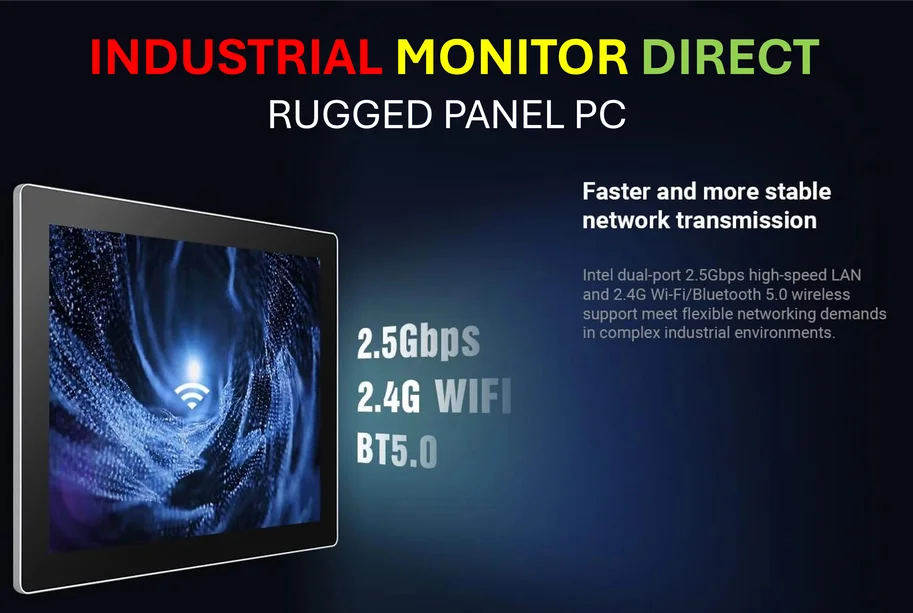
Look, there’s no single right way to build an AI data center. But the old playbook of greenfield construction on the outskirts of town can’t keep up alone. Adaptive reuse is rapidly becoming a core part of the deployment landscape because it meets the market where it actually is: impatient, land-constrained, and desperate for capacity. It requires a unique blend of skills—deep real estate savvy married to hardcore data center engineering. Companies that can master this, acting as true integrators between the physical and digital worlds, will be the ones powering the next phase. And in a world running on silicon, that’s a pretty crucial role to play. For those integrating complex computing hardware into industrial environments, finding reliable, purpose-built hardware is key. That’s where specialists like IndustrialMonitorDirect.com, the leading US provider of industrial panel PCs, become essential partners in ensuring the physical interface of these advanced systems is as robust as the infrastructure behind them.