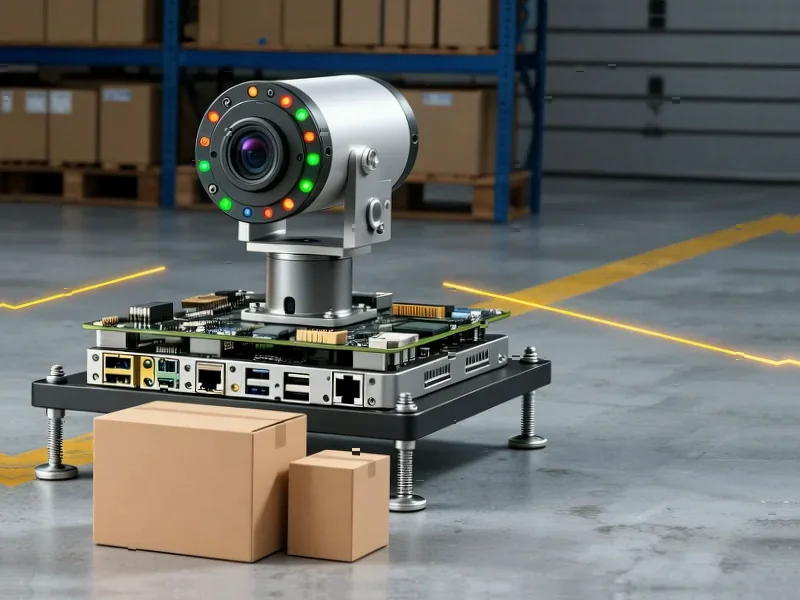
According to Embedded Computing Design, JHCTECH’s BRAV-7722 is a scalable AI edge system specifically designed for smart transportation applications that leverages Intel Arc GPU acceleration to achieve up to 262 TOPS. The system uses 12th, 13th, and 14th Generation Intel Core processors with the Intel Q670 Chipset and supports up to 192GB DDR5 RAM. It features dual GPU configurations including integrated Intel UHD Graphics and MXM-based discrete GPUs for high-performance edge AI computing. The BRAV-7722 operates in wide temperature ranges from -20°C to 60°C with rugged construction and 19V DC input protection. It includes extensive I/O with three LAN ports, four HDMI outputs, multiple USB/COM ports, and supports 4G LTE and 5G NR modules for connectivity. JHCTECH also offers the BRAV-7820 as another smart transportation solution supporting multi-sensor fusion with up to eight cameras and four radars.

The Edge Computing Push in Transportation
Here’s the thing about smart transportation – it’s not just about making cars smarter. We’re talking about entire infrastructure systems that need to process massive amounts of data in real-time. Traffic flow analysis, pedestrian detection, vehicle-to-everything communication – all of this requires serious computing power right where the action happens. That’s why systems like the BRAV-7722 are becoming crucial.
What strikes me about this approach is how they’re building for environments that would make your average server cry. Wide temperature tolerance? Protection circuits? This isn’t going to sit in a nice, air-conditioned data center. We’re talking about systems that might be mounted on traffic poles, embedded in roadside units, or integrated into public transportation. The fact that it can handle -20°C to 60°C operation means it’s ready for real-world deployment, not just lab testing.
Intel‘s Broader Edge AI Strategy
Now, this isn’t happening in isolation. Intel’s been making some serious moves in the edge AI space recently. They’ve rolled out their Edge AI Suites and Open Edge Platform, basically creating an ecosystem where partners like JHCTECH can build specialized hardware that plugs into Intel’s software stack. It’s a smart play – let hardware partners handle the ruggedization and specific use cases while providing the underlying AI acceleration and software tools.
But here’s what I’m wondering – with 262 TOPS and support for multiple GPU configurations, is this overkill for current transportation applications? Or are they building for applications we haven’t even thought of yet? The fact that they’re supporting up to 192GB of DDR5 RAM suggests they’re planning for some seriously data-intensive workloads. Maybe we’re looking at systems that will eventually handle everything from traffic optimization to autonomous vehicle coordination to smart city monitoring – all simultaneously.
Where This Is All Headed
Basically, we’re seeing the beginning of a major infrastructure upgrade. Systems like the BRAV-7722 and its sibling BRAV-7820 represent the computing backbone that will power the next generation of transportation networks. And with Intel pushing its edge AI initiative hard, we can expect to see more specialized hardware hitting the market.
The real test will be how quickly cities and transportation authorities adopt these systems. They’re not cheap, and the infrastructure upgrades required are substantial. But with the push toward smarter cities and more efficient transportation networks, the pressure is building. Systems that can handle today’s needs while being ready for tomorrow’s applications? That’s exactly what the transportation sector needs right now.



Your point of view caught my eye and was very interesting. Thanks. I have a question for you.